One of these actually does something
Setup lighting splits cleanly into two categories, and they are usually sold as
one.
Bias lighting — a dim, neutral light on the wall behind your monitor — has a
real and well-understood effect on eye comfort. Decorative lighting — strips,
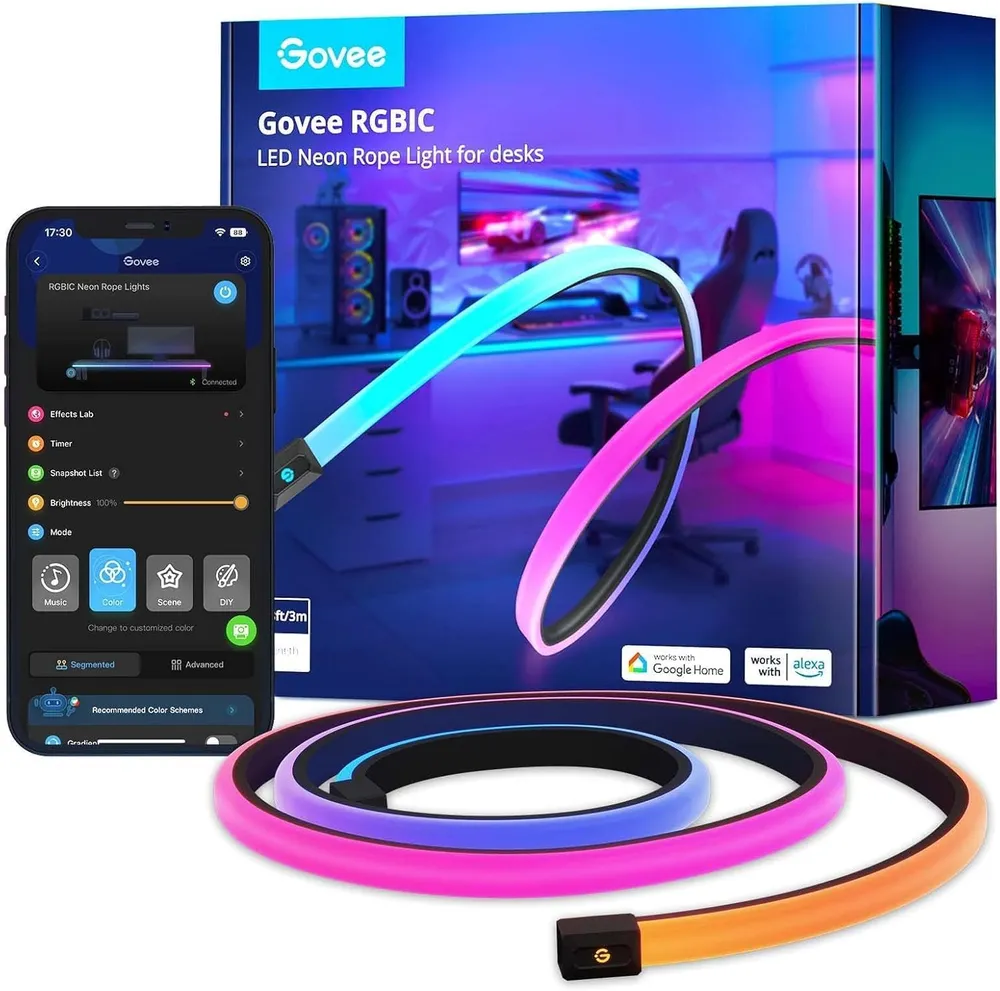
neon rope, colour-cycling anything — makes a room look the way you want it to
look, and does nothing for your eyes except when it is badly placed, in which
case it makes things worse.
Both are worth buying. Only one of them is worth buying for a reason.
Why light behind the screen helps
Your pupil size is set by the overall brightness your eyes are taking in.
In a dark room with a bright monitor, those two demands conflict constantly. Look
at the screen and your pupils narrow. Glance at your keyboard, the wall, your
phone, and they widen again. Every one of those adjustments is muscular work,
repeated for hours, and the accumulated effort is a large part of what people
describe as tired eyes.
A dim light on the wall behind the monitor lifts the brightness of everything
around the screen, so the gap between screen and surroundings narrows and the
adjustment mostly stops. The screen stays the brightest thing you look at — it
just is not the only bright thing in the room.
The light should be aimed at the wall, not at you, and it should be dimmer than
the screen. If you can see the source itself while looking at the monitor, it is
in the wrong place.
Lighting the desk without lighting the screen
The other half of the problem is seeing your keyboard without washing out the
panel.
A conventional desk lamp is bad at this. Placed beside a monitor it throws light
across the screen surface, and a matte panel turns that into a dull haze while a
glossy one turns it into a reflection of the lamp.
A monitor light bar solves it with geometry rather than brightness. It clamps to
the top edge of the screen and its reflector throws light forward and down, onto
the desk, with a deliberately sharp cutoff so almost nothing lands on the panel
face. That asymmetry is the entire product, and it is why a light bar works
where a brighter lamp does not.
Colour temperature, briefly
Around 6500 K is neutral white and close to what most monitors call white. A
wall lit at that temperature stays out of the way.
Go much warmer and the wall behind the screen turns orange, which shifts how you
read colours on the panel. Go cooler and it turns blue and clinical.
For late sessions, warmer light in the room is more comfortable and there is no
competitive cost to it. Just keep the wall directly behind the monitor neutral if
you care about what you are seeing.
Placement beats product
Most lighting disappointment is a placement problem sold as a product problem.
Aim at surfaces, never at eyes. Every light in the room should be bouncing
off a wall, a ceiling or a desk.
Keep the screen brightest. If the room competes with the monitor, you have
made the original problem worse in a different direction.
Hide the source. A strip you can see the individual LEDs of is a row of small
glare sources. Tuck it behind an edge so you see the light and not the emitter.
Light the wall, not the back of the monitor. The glow should spread across
the wall, which means a few centimetres of gap and a light aimed outward.
What we would ignore
Screen-sync features. Fun for films, actively unhelpful in a competitive
game where the wall behind you flashing on every muzzle flare is one more moving
thing in your peripheral vision.
Music reactivity. Same reasoning, plus it is in your field of view.
Brightness figures quoted in lumens for a decorative strip. You will run it
at a fraction of maximum.
Anything that only dims through a phone app. It will live on one setting
forever.
 GEAR
GEAR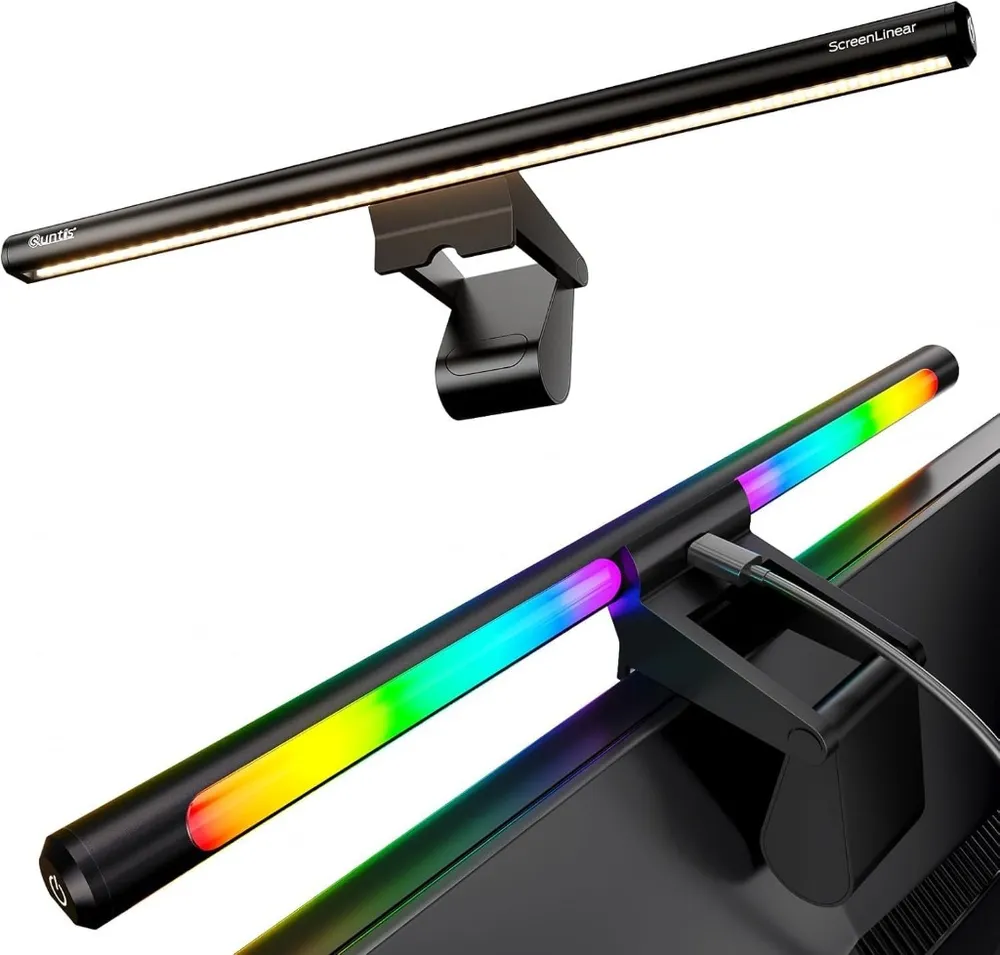

Win a CS2 M4A1-S Black Lotus this month. Free entry for subscribers + daily tickets on Daily Duel.