Why the sensor stopped being the answer
For most of the history of this hobby, choosing a mouse meant choosing a sensor.
That question is closed. Every flagship sensor shipping today — Logitech’s HERO
line, PixArt’s 339x and 395x families, Razer’s Focus Pro — tracks accurately
past any speed a human arm produces, with no smoothing and no angle snapping.
The differences that remain are below the threshold at which anyone has
demonstrated a change in performance.
This is inconvenient for marketing, which is why the numbers on the box have
grown to 26,000 DPI and beyond. Those figures describe a capability nobody uses.
A player at 400 DPI is using one sixty-fifth of a 26K sensor’s range, and
turning it up does not make anything more precise — it makes the same hand
tremor cover more pixels.
So the sensor is a pass/fail check, not a ranking criterion. Once it passes, the
things left over are physical: mass, shape, and how the mouse behaves when you
stop moving it.
Weight, and the point where it stops mattering
Counter-Strike aiming is mostly deceleration. You are not tracking a target
across the screen for seconds at a time; you are making a short movement and
arresting it exactly. Mass resists that, so lighter mice are easier to stop
precisely, and that is the whole of the argument.
It is a real effect and a large one down to about 60 g. Below that it flattens,
and past roughly 50 g the manufacturer has usually started removing structure to
get there. Honeycomb shells save grams by cutting holes in the part your hand
grips; some flex audibly, and a shell that creaks under a claw grip is a
distraction that costs more than the ten grams saved.
The useful version of this rule: get under 70 g, prefer a solid shell to a
perforated one at the same weight, and stop caring after that.
Shape is the decision you actually make
Everything above is comparable between mice. Shape is not, and it is the reason
people keep or abandon a mouse.
Grip style sets what you want. A palm grip rests the whole hand on the shell and
wants a pronounced rear hump that fills the space under the palm. A claw grip
arches the fingers and lifts the palm partly off, wanting a shorter shell with a
hump further forward. A fingertip grip touches only at the fingers and wants
something small and light enough to move without wrist involvement.
Hand length matters more than most buyers expect. Measure from the wrist crease
to the tip of the middle finger. Under about 17 cm, most full-size shapes will
feel long and you will end up gripping the back of the mouse. Over about 20 cm,
small ambidextrous shapes leave your palm unsupported.
There is no substitute for holding one, and no review — including ours — can
tell you what your hand prefers. What a review can tell you is which shapes are
safe bets: a neutral ambidextrous shell suits the widest range of hands, and a
right-handed ergonomic shell suits palm and relaxed claw grips better than any
symmetric design does.
The surface is half the system
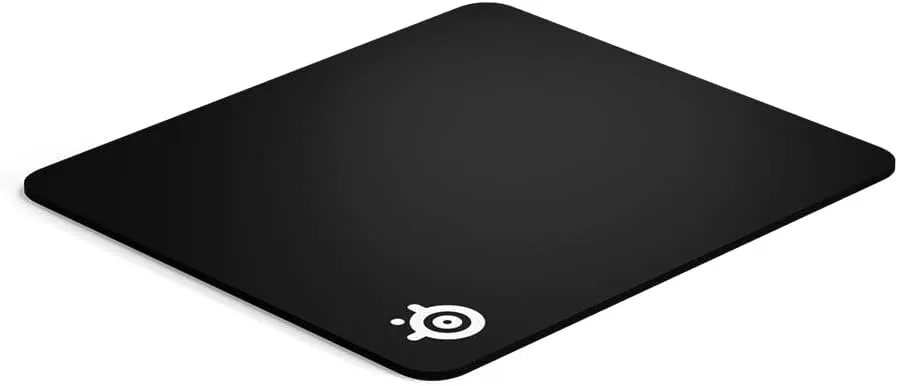
A mouse and a mousepad are one instrument, and buying a good mouse to put on a
worn or undersized pad wastes most of what you paid for.
Counter-Strike is played at low sensitivity, which means large physical
movements, which means you need room. A 180 degree turn at a typical
Counter-Strike eDPI takes most of a forearm sweep. If that sweep runs off the
edge of the pad mid-fight, the pad is too small — 450 x 400 mm is a sensible
floor, and larger is easy to justify.
The other axis is speed against control. Fast surfaces glide further for the
same effort; control surfaces resist more and stop more predictably. For a game
built on stopping accurately, control is the right default. A thicker cloth pad
also forgives an uneven desk, which is worth more than it sounds if you play on
something that is not perfectly flat.
Pads are consumables. Cloth compresses and the surface polishes where your hand
rests; when the glide feels different in the middle than at the edges, it is
finished.
What we would ignore
RGB. It is on the underside of your hand.
Onboard profiles, unless you carry the mouse to LAN events. Counter-Strike
needs one DPI step and one polling rate, set once.
Software features that promise better aim. Angle snapping, smoothing and
prediction all modify your input to look tidier, and every one of them puts
distance between your hand and the crosshair. Turn them off.
Very high DPI presets. See above — you will use 400 or 800.
 GEAR
GEAR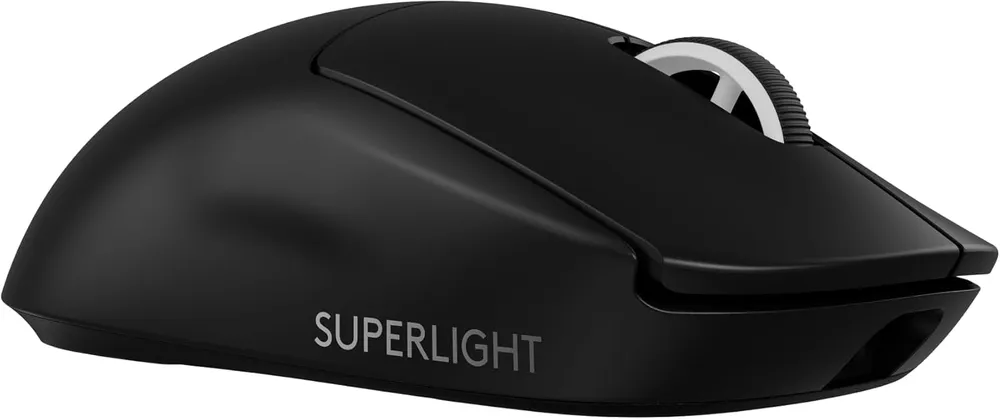
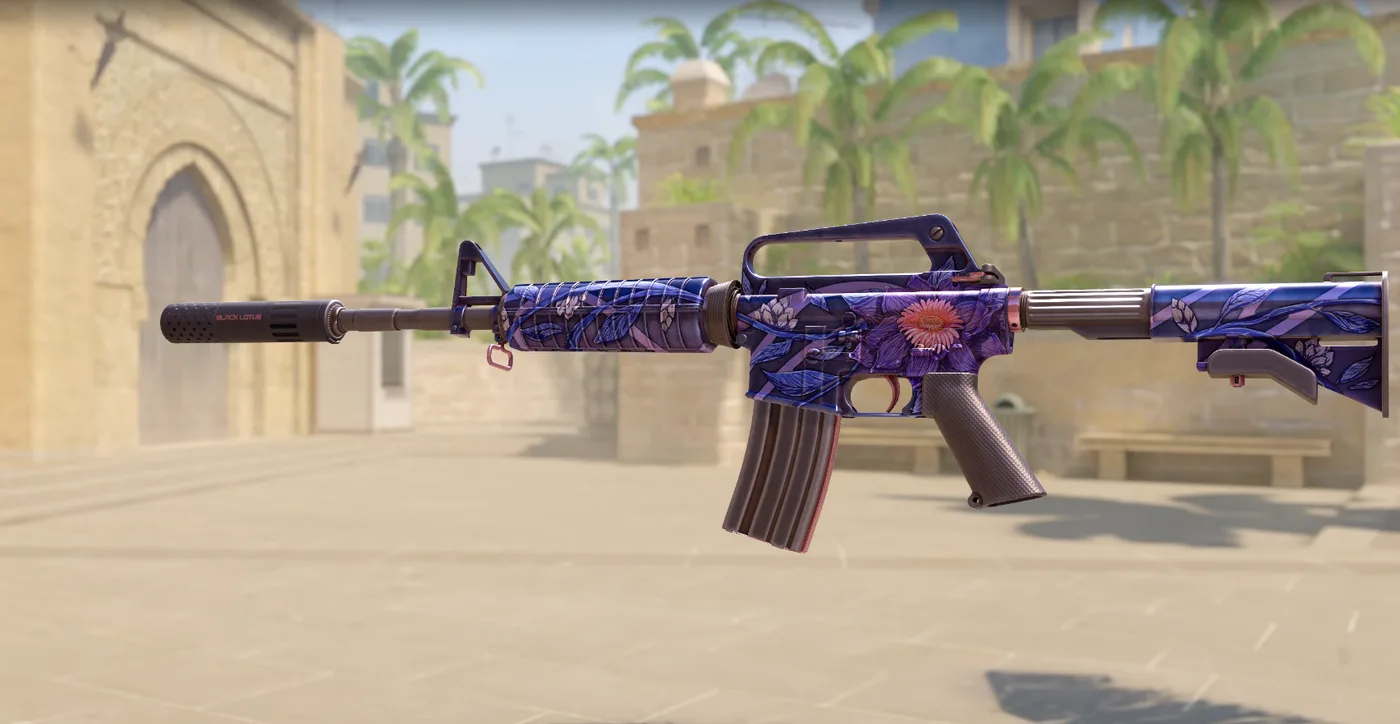
Win a CS2 M4A1-S Black Lotus this month. Free entry for subscribers + daily tickets on Daily Duel.