The only real specification is you
There is no performance argument for a chair. There is a stamina argument, and
it is decided entirely by whether the chair’s measurements match yours.
Four numbers do most of the work: seat height, seat depth, seat width, and
backrest height. Every one of them is a comparison with your own body and your
own desk, which is why a chair someone else calls perfect can be unusable for
you.
Measure before you shop. Sit on a hard chair with your feet flat and have
someone measure from the floor to the top of the seat, and from the back of your
knee to the back of your hip. Those two numbers eliminate most of the market in
about a minute.
Height comes first because it sets everything else
Set the chair so your feet are flat on the floor and your knees sit at roughly a
right angle. Now look at your forearms: they should reach the desk with your
shoulders relaxed, not lifted.
If the chair is too low, you reach up and your shoulders carry the load all
evening. If it is too high, your feet dangle and the seat edge presses into the
underside of your thighs.
When the desk is fixed and too high — which is common, since most desks are
built for writing rather than for a keyboard and mouse — you raise the chair and
add a footrest. That is what footrests are actually for.
Seat depth is the one people get wrong
Almost nobody checks this, and it causes more discomfort than anything except
height.
Sit fully back against the backrest. There should be roughly two to three
fingers of gap between the front edge of the seat and the back of your knee.
Too deep, and you either perch forward — losing the lumbar support entirely — or
the edge presses behind your knee and restricts circulation. Too shallow, and
your thighs are unsupported and your weight concentrates on a smaller area.
Taller players in particular should check quoted seat depth rather than assuming
a large chair is proportioned for them.
Armrests matter more here than at a desk job
This is the one place where playing Counter-Strike changes the requirements.
Low sensitivity means large arm movements. A full turn is a forearm sweep, not a
wrist flick, and that sweep has to happen somewhere. An armrest set too high
blocks it; set too low, your arm hangs unsupported and your shoulder takes the
weight for hours.
4D armrests — adjustable in height, depth, width and rotation — let you set them
just below your forearm at rest so they carry weight between rounds without
being in the way during one. Some players remove them entirely for exactly this
reason, which is why removable armrests are worth having.
What the warranty tells you
Manufacturers know which parts fail. The warranty is where they admit it.
Gas lifts sink, mechanisms develop play, and foam compresses. A five-year parts
warranty is a real statement about build; a one-year warranty on a chair you
intend to sit in daily for a decade is also a statement.
Check what is actually covered — some warranties exclude the upholstery, which
is the part you will see wearing first.
What we would ignore
Racing pedigree in the marketing. The shape came from a car seat, where the
job was holding a body still through corners. At a desk it is a preference.
Massage functions and built-in speakers. Extra failure points on a chair.
Load ratings quoted as a headline. Useful as a build signal, not as a
selection criterion.
RGB. On a chair. Behind you.
 GEAR
GEAR
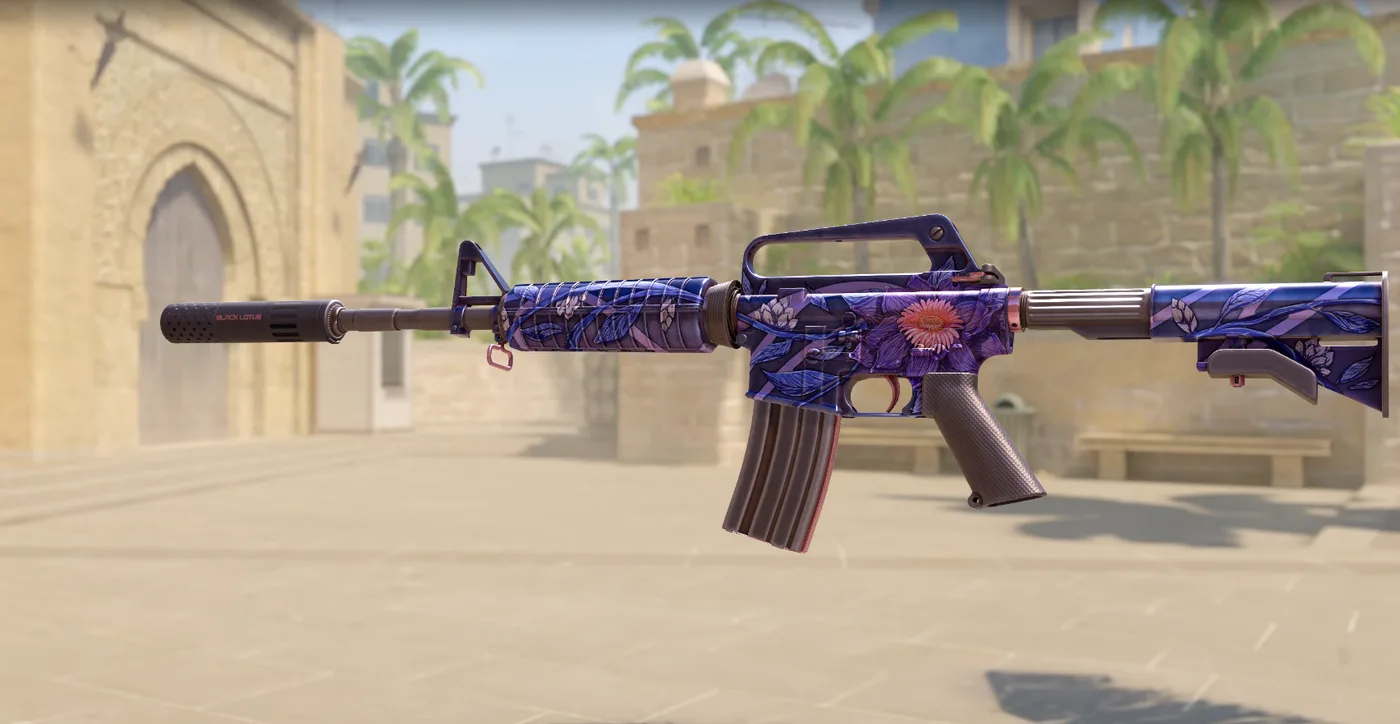
Win a CS2 M4A1-S Black Lotus this month. Free entry for subscribers + daily tickets on Daily Duel.