The game already did the hard part
Counter-Strike outputs stereo designed for headphones. Distance, direction and
occlusion are already encoded in the two channels before anything reaches your
headset. That is why a modest pair of headphones is enough to call a position
accurately, and why the expensive features sold on top rarely help.
Once you understand that, most of the marketing on a headset box reads
differently. Anything promising to improve positioning is proposing to modify a
signal that was already correct.
Why virtual surround makes it worse
The pitch is intuitive: more channels, better positioning. The implementation is
not.
Your headset has two drivers, one per ear. Virtual 7.1 takes the game’s stereo
output, expands it into seven notional speaker positions, then applies a
head-related transfer function to fold those seven back down into the two
drivers you actually own. Each of those steps is a processing pass that adds
smearing and phase artefacts.
The audible result is a sound stage that feels bigger and is less precise. Under
pressure, “somewhere behind and to the left” is worse than “left, close”, and
the second is what unprocessed stereo gives you.
Turn it off in the headset software, and check the Windows spatial sound setting
too — it can be enabled independently and people often run both without knowing.
Comfort is the specification that matters
This is the least exciting section on the page and the most useful.
Clamp force decides whether your temples ache after two hours. Too loose and
the headset shifts every time you turn your head.
Weight compounds with clamp. A heavier headset needs to spread its load
better to stay comfortable.
Pad material decides heat. Leatherette isolates better and traps warmth;
fabric and velour breathe and let more noise through. In a warm room this is
the single biggest comfort variable.
Glasses change all of it. Thick pads with soft foam let arms sit without
pressing a line into the side of your head.
Nobody stops using a headset because its drivers were 50 mm rather than 53. They
stop because it hurt.
The microphone is half the product
In a team game your microphone is doing as much work as the drivers, and it is
the part reviews skip.
A detachable boom is the best arrangement: it sits close to your mouth,
picks up less of the room, and comes off when you are not playing. A fixed
boom works the same and is always there. An in-line or built-in mic sits
too far away, picks up your keyboard, and makes people ask you to repeat calls.
Test yours by recording rather than trusting how it sounds in your own ears —
sidetone flatters everything.
Open or closed
Neither is more accurate. They suit different rooms.
Closed back isolates you from the room and the room from you. It is the
right answer for shared spaces, LANs, and anyone with a mechanical keyboard and
a microphone that has to live near it.
Open back lets air and sound through both ways. It sounds more spacious and
less fatiguing over long sessions, and everyone near you hears your game.
If you play in a room with other people in it, that decision is already made.
What we would ignore
Driver diameter. 40, 50, 53 mm — tuning matters, size barely does.
Frequency ranges quoted beyond human hearing. 10 Hz to 40 kHz on a box is a
measurement, not a benefit.
RGB on the earcups. You are wearing it.
Presets named after the thing you want. A Footsteps mode is an equaliser
curve someone guessed at.
 GEAR
GEAR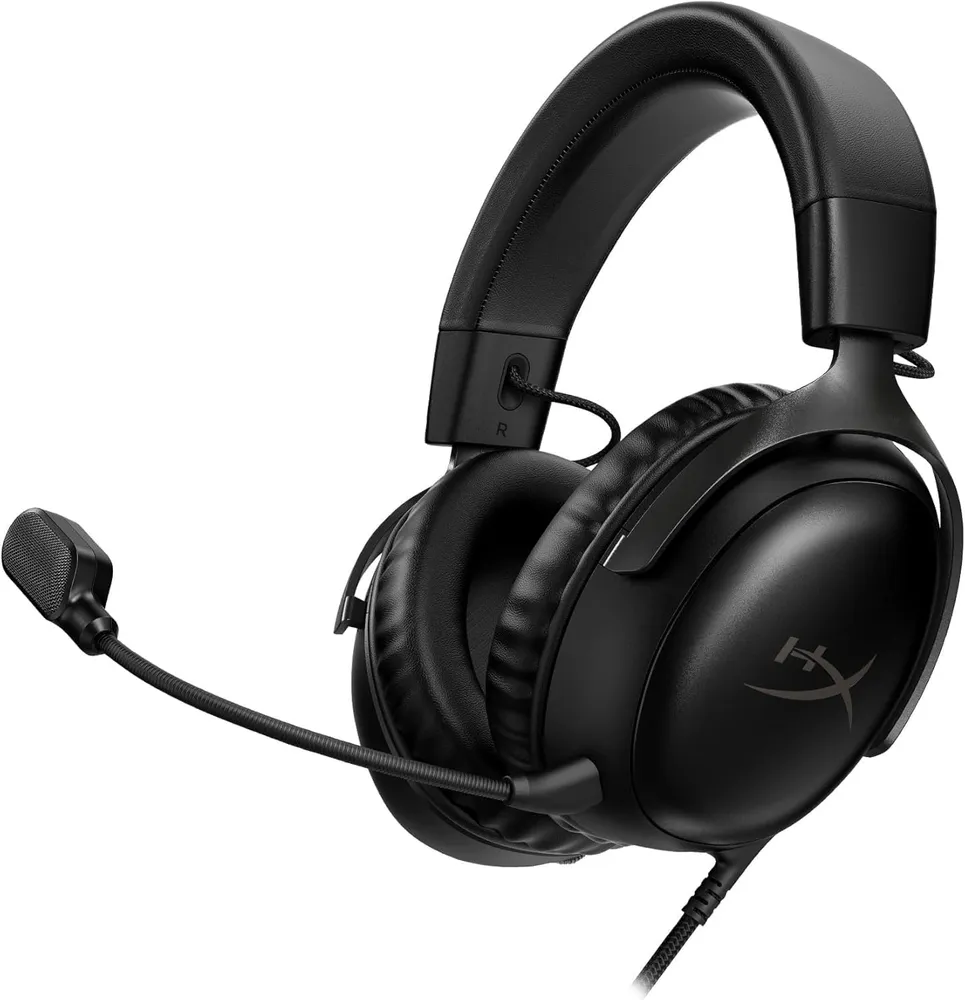
Win a CS2 M4A1-S Black Lotus this month. Free entry for subscribers + daily tickets on Daily Duel.